ServicesWhole-Home Filtration
Whole-Home Filtration in Fountain Hills, Cared For After Install
We fit a filtration system where water enters your home, so every faucet, shower and appliance runs on cleaner, better-tasting water. It starts with a free water test, and after the install we check back and show you how to keep the system working well.
One System for Every Tap in Your Home
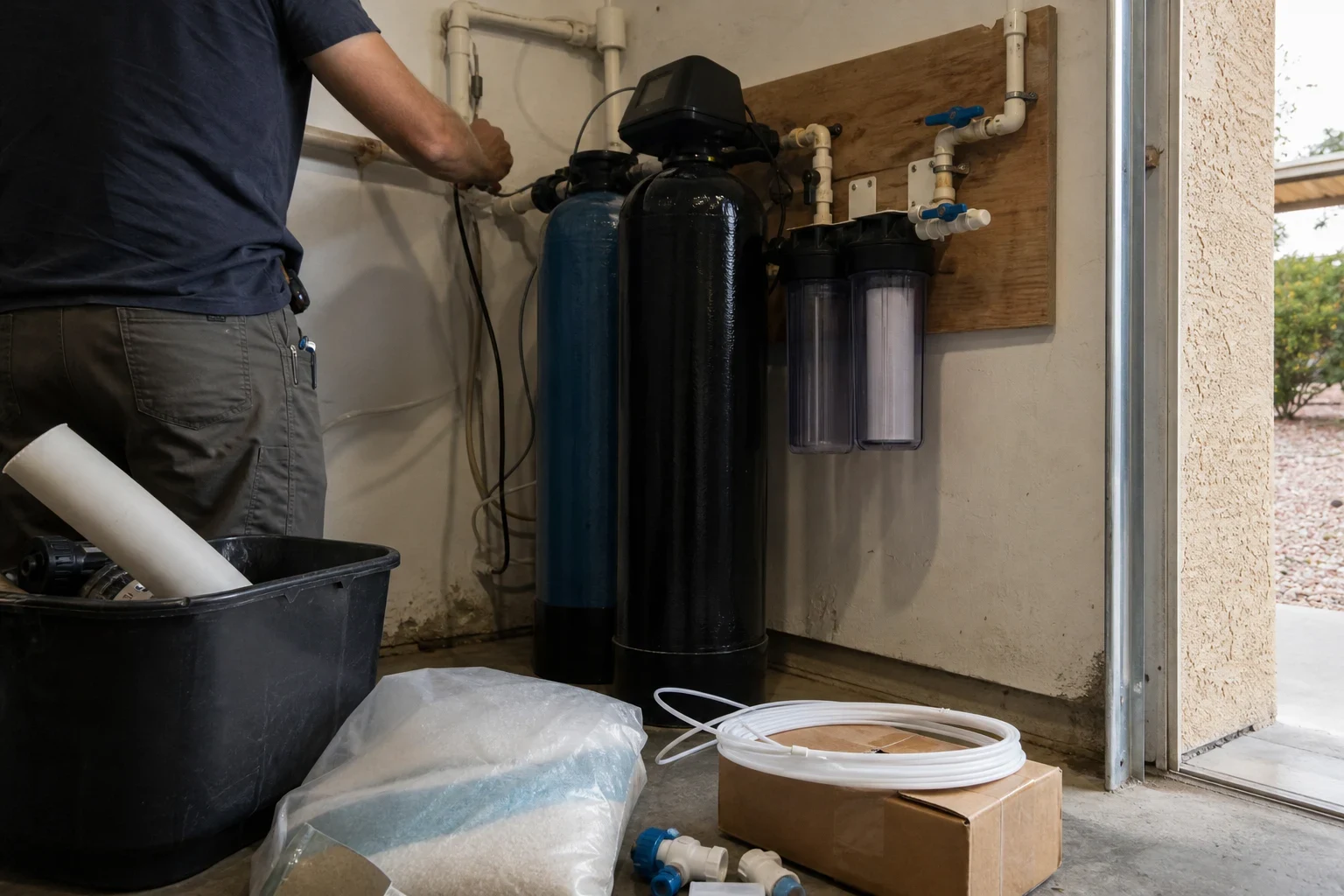
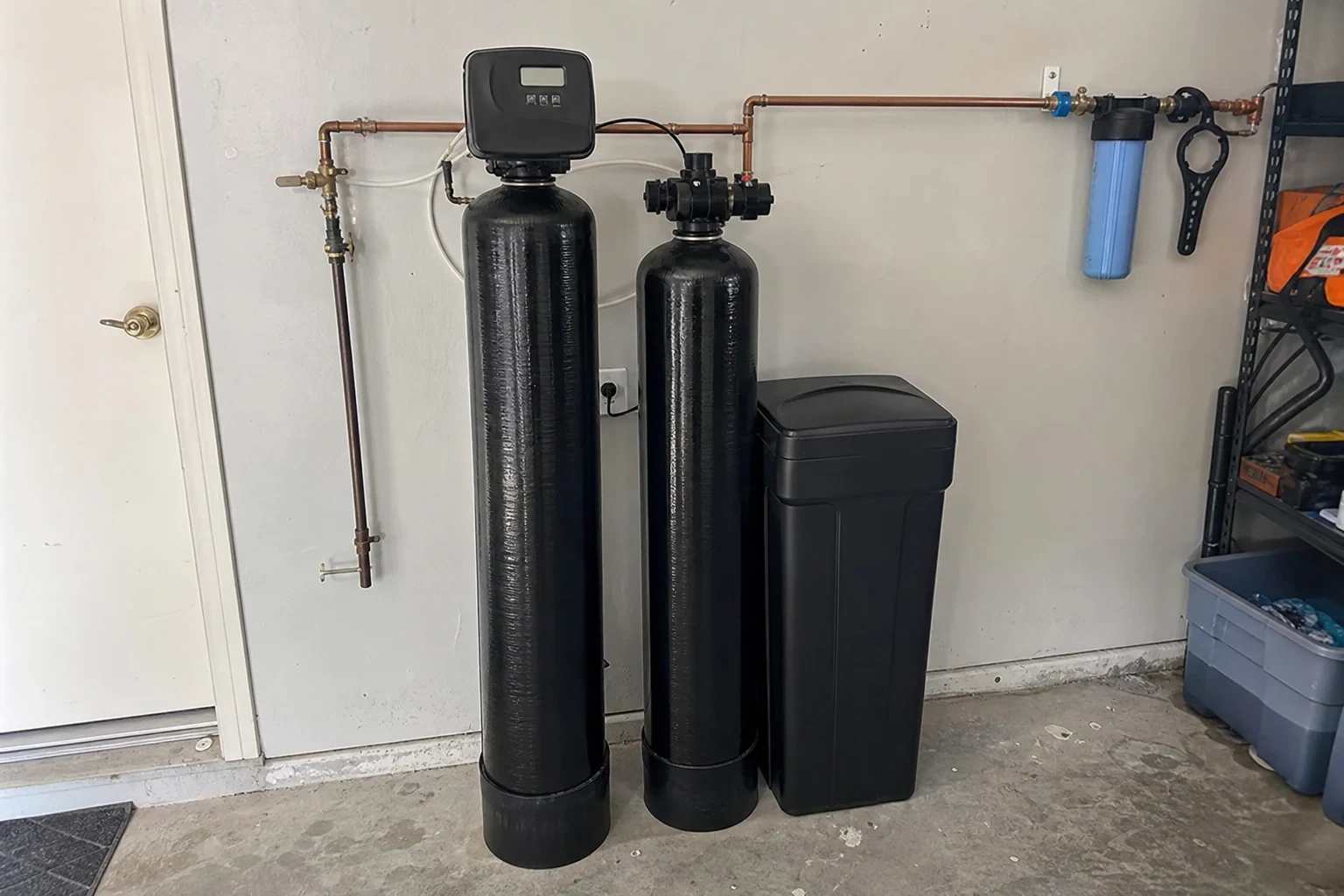
A whole-home filter sits on the main line, before the water splits off to your kitchen, bathrooms and laundry. Most of the systems we install use activated carbon to take out the chlorine taste and smell left by municipal disinfection, with a sediment stage in front to catch grit before it reaches fixtures and valves.
It is the right choice when the complaint is everywhere in the house: the shower smells like a pool and the kitchen tap tastes flat. If your concern is drinking water alone, an under-sink reverse osmosis unit may suit you better. If the problem is white scale on glass and fixtures, that is a job for a water softener, because carbon does not remove hardness. Our free water test tells us which of these you actually need.
Once the system is in, our part is not finished. We check back after it has settled and explain the small amount of care it needs.
What a Whole-Home Install Includes
A free water test first
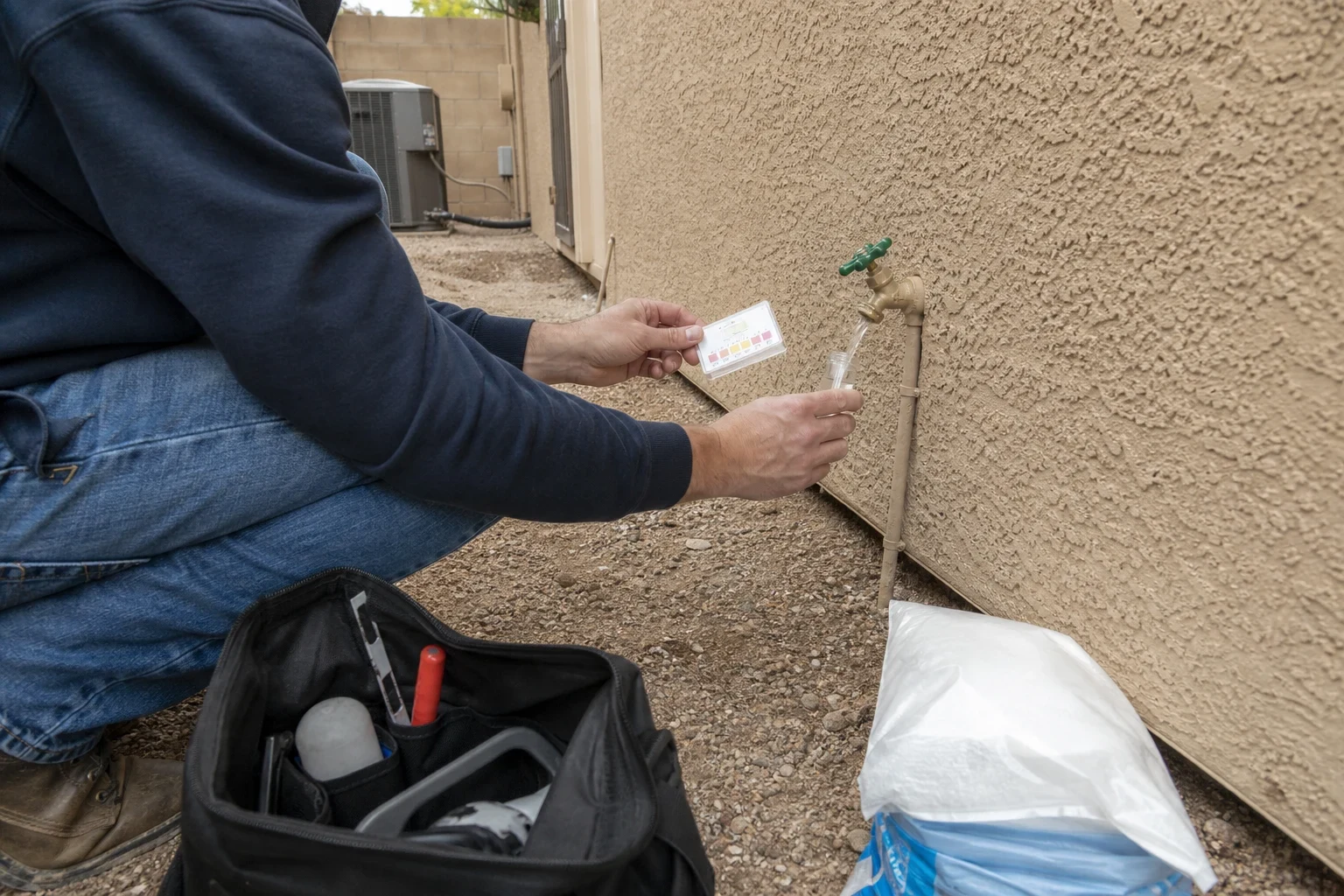
We test your water before we recommend anything. It is a free water test with zero obligation, and the results shape the media, the tank size and whether you need filtration at all.
Sizing to how your home uses water
We look at the number of bathrooms, peak demand in the morning and the diameter of your main line. An undersized tank drops pressure when two showers run at once, so we size for your busiest hour, not the average.
Sediment pre-filter and carbon tank
The pre-filter catches sand and scale flakes so the carbon bed is not clogged early. If your test shows chloramine rather than plain chlorine, we use a catalytic carbon that handles it properly.
Bypass valve and neat pipework
We fit a bypass valve on every system, which lets your home keep running water while the filter is being serviced. Fittings match your existing pipe, runs are supported and squared, and install is included with water treatment systems.
A care walk-through and a check-back
Before we leave, we show you the bypass, the pre-filter housing and how to tell when media is due. Then we follow up after the system has been running a while.
Signs Whole-Home Filtration Is Worth a Look
- The shower smells of chlorine
- Hot water releases chlorine as vapor, so the smell is often strongest in the shower. A point-of-use filter at the kitchen sink does nothing for it.
- You buy bottled water for the taste
- If the tap is safe but nobody wants to drink from it, carbon usually solves the taste and odor at every faucet.
- Grit in aerators and showerheads
- Small particles collecting in aerators point to sediment moving through your lines. Over time it wears washers and appliance valves.
- Pitcher and fridge filters keep piling up
- Changing several small filters around the house adds up. One main-line system can replace most of them.
- An older system that has stopped helping
- Carbon media wears out. If the taste has crept back on an existing filter, we can tell you whether new media or a new system makes more sense.
How the Work Goes
- 1
Free water test and a conversation
We test your water, ask what bothers you about it and look at where the main line enters your home. You get a plain explanation of what the results mean.
- 2
Recommendation and installed pricing
We recommend one system that fits your results, explain why, and give you installed system pricing by phone. If filtration is not the answer, we say so.
- 3
Install day
We shut off the water, protect the floor around the work area and cut the system into your main line, usually near where it enters the garage or the side of the house. Then we flush the new media until the water runs clear and restore pressure through the house.
- 4
Walk-through and care notes
We show you the bypass, how to change the pre-filter cartridge and roughly when the carbon will need replacing. The work area is cleaned before we go.
- 5
We check back
After the system has been in use for a while, we follow up to ask how the water tastes, check that pressure is holding and answer anything that has come up.
What Shapes the Price
Two homes on the same street can need quite different systems. The price follows the size of your home, what your test shows and how easy the main line is to reach. We explain each part when we give you pricing by phone.
- Household size and peak demand
- A home with four bathrooms draws far more water first thing in the morning than a two-bath home, and the tank has to keep up without a dip in pressure. The bigger media bed that requires also goes longer before it needs fresh carbon.
- Type of filter media
- Standard activated carbon handles chlorine well. Catalytic carbon or added stages cost more and are only worth it when the test calls for them.
- Location and plumbing
- An easy main line in the garage is straightforward. Tight access, an outdoor location that needs shading from the sun, or extra fittings to tie into your pipe add time and materials.
- Pairing with other equipment
- If your test also supports a softener, installing both together on one plan can be more efficient than two separate visits.
Common Questions About Whole-Home Filters
- Does a whole-home filter reduce water pressure?
- When the system is sized correctly, you should not feel a difference day to day. Weak pressure usually traces back to an undersized tank or a blocked pre-filter. We size for the hour your home uses the most water and teach you to swap the pre-filter before it clogs.
- When does the carbon need replacing?
- It depends on the amount of carbon in the tank and the volume of water your family uses. A well-sized tank can often run several years before the media is changed, while the sediment cartridge ahead of it is replaced more often. We lay out a schedule for your system and usage and look at it again during our check-back.
- Will this system soften my water too?
- It will not. Carbon takes out chlorine taste, smell and some other compounds, but the calcium and magnesium behind scale pass through. If your test shows hardness worth dealing with, a water softener handles that, and the two systems often pair well.
- Should I add reverse osmosis for drinking water?
- Plenty of households find carbon is enough. Reverse osmosis takes things further by cutting dissolved solids and trace contaminants, which is why some homes put an under-sink unit at the kitchen for drinking and cooking. Your test results show whether that step is worthwhile.
- Is the water test free, and am I obligated to buy?
- The test costs you nothing. We do the sampling, explain the readings and answer questions at no charge, and none of it ties you to buying a system. Many people just want to know what their taps are delivering, and that is reason enough to call.
Start With a Free Water Test
We will test your water, tell you plainly whether whole-home filtration fits, and give you installed pricing if it does. After the install, we check back to make sure it is working as it should.