ServicesWater Softeners
Water Softener Installation in Fountain Hills
We size and install water softeners from the results of a free test of your home's water, then come back after the install to check the settings and show you how to care for the system. You get softer water, less scale on fixtures and a clear plan for salt and upkeep.
How a Softener Works and Who Needs One
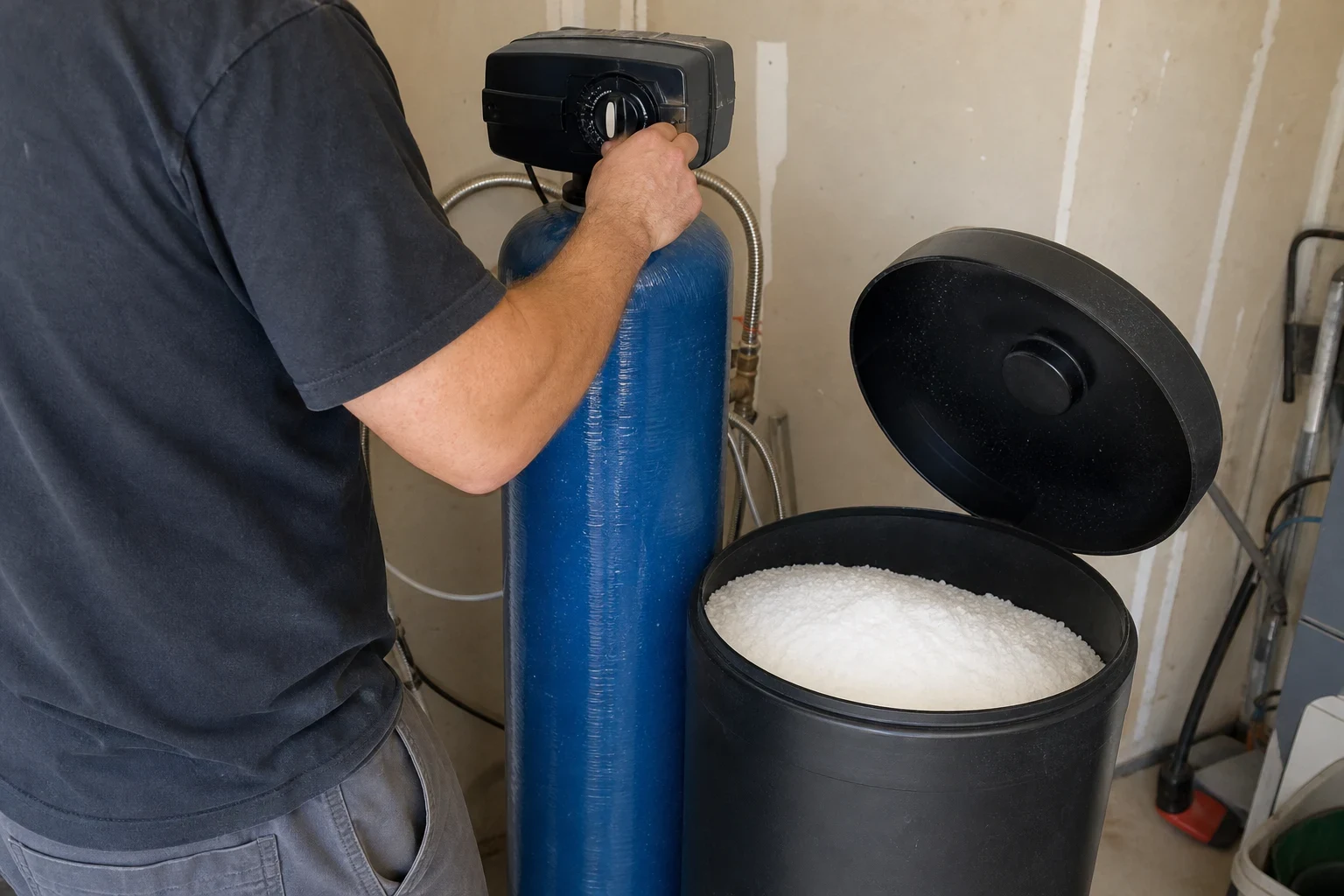
Hard water carries minerals it picked up underground, mostly calcium with some magnesium. You cannot see them while the water flows. They show up once water is heated or dries on a surface: a pale crust on a faucet, a haze on shower glass, a gritty layer collecting inside the water heater. A softener removes those minerals before they reach your fixtures. In the main tank, resin beads trade the hardness for sodium or potassium, and a brine tank recharges the beads on a schedule set by the control valve.
Water across the Valley tends to run hard, but the number at your own tap is worth measuring rather than guessing. We test first, then size the softener to that reading and to how much water your home uses each day. If the test shows hardness is not the real issue, we will say so and point you toward whole-home filtration or reverse osmosis instead.
What Your Softener Installation Includes
A free water test first
We measure hardness in grains per gallon and look at chlorine and iron, which affect how the resin performs. The test comes with zero obligation.
Sizing to your home
Capacity is matched to your hardness reading and household size, so the unit regenerates often enough to keep up without wasting salt and water.
Installation included
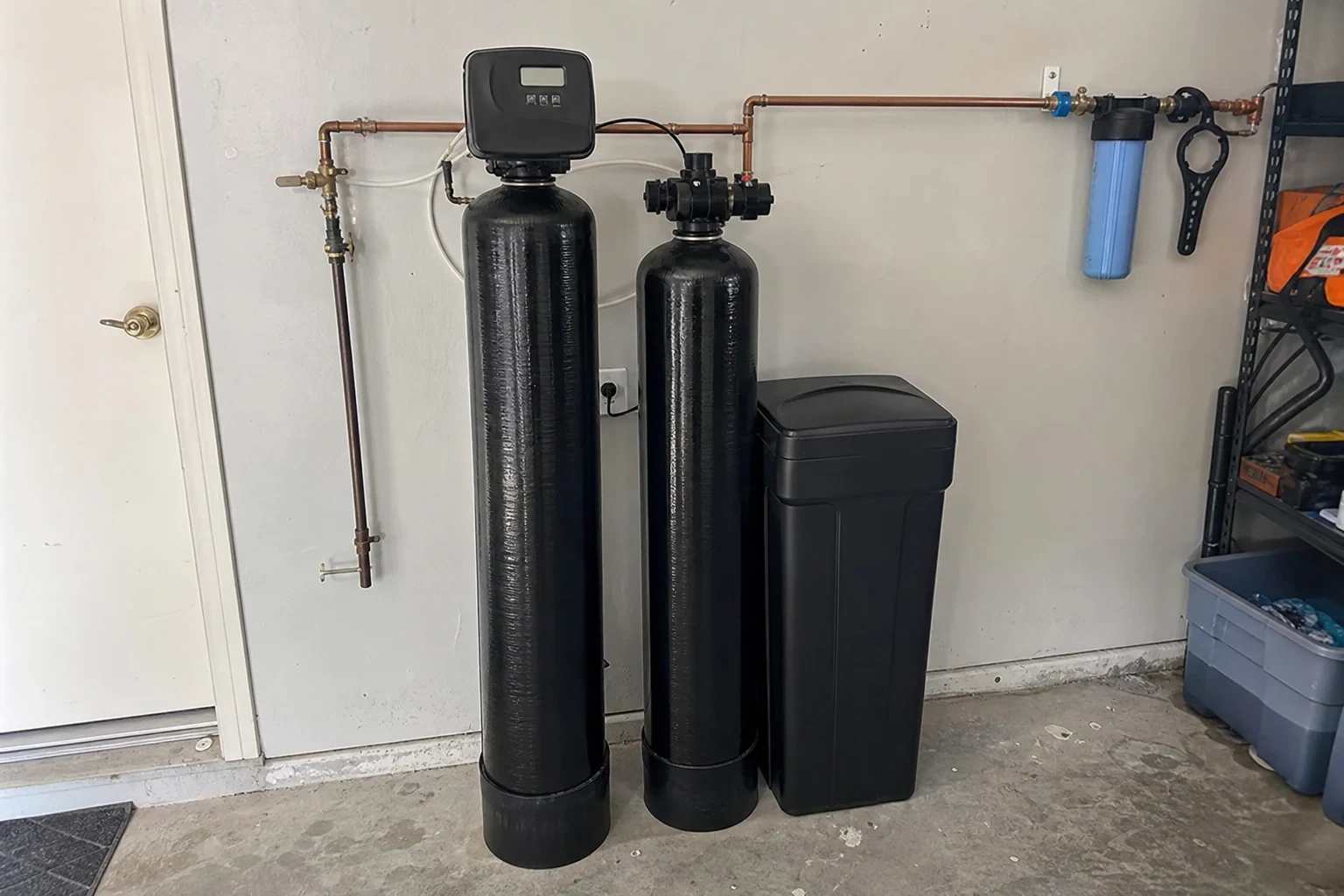
Install is included with our water treatment systems. If your home was built with a dedicated softener loop, we tie into it; if not, we plan the plumbing with you first. Every unit gets a bypass valve so it can be isolated, and the drain line is run with a proper air gap.
Programming and a tap check
We set the control valve for your hardness and usage, run a first regeneration, then test softened water at a faucet before we leave.
A follow-up visit
A few weeks after the install we check back, retest the water, adjust the settings if needed and walk you through salt and care.
When Hard Water Starts to Show
Crust that keeps returning
A pale, chalky ring that reappears around a faucet, showerhead or drain within days of a good scrub is usually minerals left behind as water dries.
Cloudy glasses and spotted doors
Glassware that comes out of the dishwasher dull, or shower doors that never look clear, tell you the same story.
Soap that will not lather
Hardness minerals react with soap and leave a sticky curd behind. Shampoo and detergent empty faster, and skin can feel coated even after a long rinse.
A rumbling water heater
Scale settling at the bottom of the tank can make it pop or rumble as it heats, and it slowly cuts efficiency.
An old softener that seems idle
If the salt level never drops or the water feels hard again, the resin, valve or brine draw may have failed. We will check it before suggesting a replacement.
From First Test to Follow-Up Visit
- 1
A free test and a plain explanation
The first step is measuring your water at no cost and walking you through what the hardness number means for your fixtures. Installed system pricing follows by phone, with each part named.
- 2
Install day
We close the main valve, protect the floor, connect the softener and bypass, and route the drain. Your water is off for a stretch of the visit rather than all of it, and we let you know before we shut it.
- 3
Set up and clean up
We fill the brine tank, program the valve, test at the tap and clear away packaging and old fittings.
- 4
Check back and adjust
After the system has run through several regenerations, we return to retest hardness, fine-tune the settings and show you how to spot salt bridging and when to top up.
What Moves the Price of a Softener
Every quote starts from your test results and a look at where the unit will sit. Install is included with our systems, so the price mostly reflects the equipment and the plumbing it needs. We explain each line by phone before anything is scheduled.
- Your reading and your usage
- A higher grain count and a busier household call for more resin capacity. A bigger tank costs more up front but recharges less often.
- Plumbing at the install spot
- Many homes already have a softener loop in place. Where one is missing or needs repair, extra pipe work adds to the job.
- Valve type
- A demand-style valve tracks how much water your home actually draws and recharges only when the resin needs it. Over time it usually goes through less salt than a clock-based timer.
- Chlorine protection
- Chlorine slowly breaks down resin. Adding a carbon pre-filter protects it and improves taste, and it is priced separately.
- Removing an old unit
- Draining and hauling away a worn-out softener takes time we include in your quote.
Water Softener Questions
Something not covered here? (480) 637-4902
Will softened water taste salty?
Most people cannot taste it. A softener trades the hardness minerals for a small amount of sodium, and the less hardness your water starts with, the less sodium it picks up. For drinking water without that sodium, a reverse osmosis system at the kitchen sink is the usual answer.
Can I use potassium instead of salt?
Yes. Potassium chloride works in most softeners, though it costs more and the valve may need a slightly different setting. We will set the unit for whichever you choose and note it during the follow-up visit.
How often will I add salt?
Salt use climbs with harder water and heavier daily use, and a larger brine tank simply holds more between refills. During the follow-up visit we show you how to read the level in the tank and what a crusted salt bridge looks like, so topping up becomes a quick habit instead of a guess.
Does a softener remove chlorine?
No. A softener targets hardness minerals. For chlorine taste and odor, whole-home filtration with carbon is the better fit, and it also protects the softener resin when installed ahead of it.
Do I need a softener if my water seems fine?
Not always. Our water testing will show your actual hardness, and if it does not justify a softener, we will tell you and leave it there.
Start With a Look at Your Water
We test your water for free, explain what the numbers mean and give you installed system pricing if a softener is the right fit. After the install, we come back to check it.