ServicesWater Testing
Fountain Hills Water Testing, Explained at Your Table
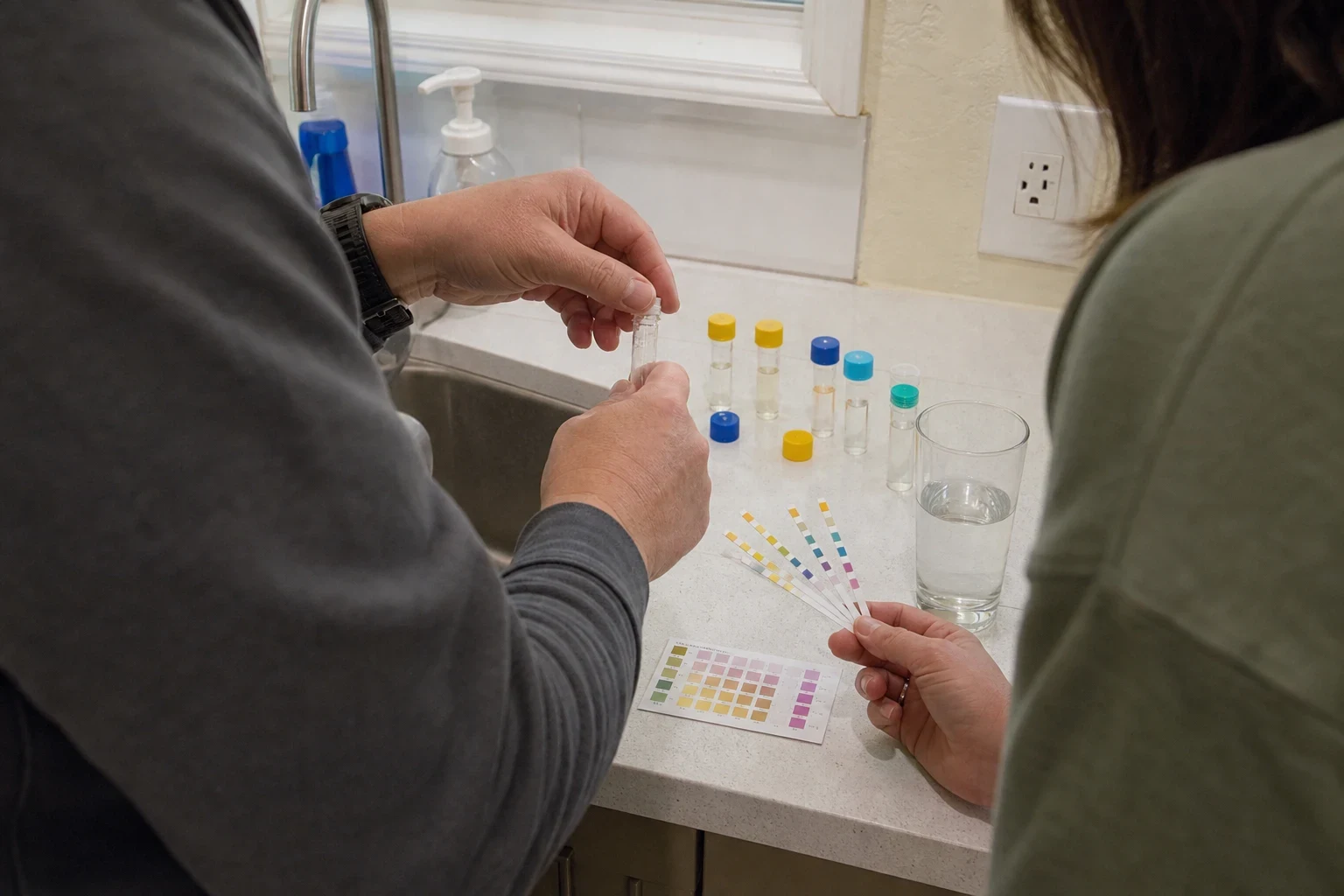
We visit your home, sample the water from your tap and go through each result with you in person. It costs nothing, carries no obligation, and by the end you will know plainly whether your water needs any treatment.
A Test That Comes Before Any Equipment
Water testing is the first thing we do for any home, and often the only thing a home needs. A good test tells you how hard your water is, how much dissolved mineral it carries, whether chlorine is behind an off taste, and where the pH sits. Those numbers decide which system makes sense, what size it should be, and whether a system makes sense at all.
Hard water is common across the Phoenix area, but common is not the same as yours. Two houses on one street can read differently depending on plumbing, an old softener that has quietly stopped regenerating, or a filter cartridge left in years too long. We test your home's water instead of guessing from a regional average.
The test is also where our follow-up begins. We keep a record of your readings, so if you ever add a system, we can test again once it is running and show you, side by side, what changed.
What the Free Water Test Covers
Hardness
Calcium and magnesium are what make water hard. We report them in grains per gallon, and that figure explains the crust on faucets, the spots on glassware and the scale slowly building inside your water heater.
Total dissolved solids
TDS is one number for everything carried in the water, minerals included. When it runs high, we look at whether reverse osmosis at the kitchen sink would improve what you drink and cook with.
Chlorine
Municipal water is disinfected, and that is a good thing. If you notice a pool-like smell or taste, a chlorine reading tells us whether whole-home filtration would address it.
pH and iron
We check pH and look for iron, which can leave rust-colored stains in sinks and tubs. Both affect which filter media will hold up.
Your existing equipment
If your home already has a softener or filter, we look it over, check its settings and tell you honestly whether it is still doing its job.
When a Water Test Is Worth Scheduling
Chalky rings on faucets
Dried mineral around showerheads, faucet bases and glass shower doors is what hard water leaves behind as it evaporates. It is usually a cue to measure hardness.
Spotted dishes and stiff laundry
Glasses come out of the dishwasher cloudy and towels feel rough even with plenty of detergent. Hard minerals interfere with soap.
A smell or taste you notice
A chlorine note in your drinking water, or a flat mineral taste, is a reasonable reason to test before buying bottled water by the case.
An older softener you are unsure of
Salt that never seems to go down, or a control head nobody has touched in years, often means the unit has stopped working.
You just moved in
A new home can come with equipment of unknown age and settings. A test gives you a baseline before you spend anything on it.
How Your Water Test Goes
- 1
A short call to set a time
You tell us what you have noticed and pick a time that works. We ask about any existing equipment so we can bring what we need.
- 2
Sampling at your tap
We draw water at the kitchen sink and, where it helps, at a second tap or ahead of an existing system. Nothing is opened up or disconnected, and the visit fits easily into a morning or afternoon.
- 3
Going over the results together
We show you each reading and explain what it means for your fixtures, appliances and drinking water. If your water is in good shape, we tell you so and leave it there.
- 4
Options explained, not pushed
If a system would help, we explain which one and why, whether that is a water softener, whole-home filtration or reverse osmosis. You get your quote by phone and decide on your own schedule.
- 5
A retest once a system is running
If you go ahead with a system, we come back to test again, confirm the readings have changed the way they should and show you how to care for it.
The Cost of a Water Test, and the Next Step
You pay nothing for the water test and have no obligation to buy. Cost only enters the picture if you later pick a system, and the test is how we price it correctly. Our water treatment systems include installation, so the number we give covers both equipment and the labor to install it.
- Your hardness reading
- The harder the water, the more capacity a softener needs between regenerations, and that sets the tank size.
- Your household's water use
- How many people, bathrooms and fixtures you have decides the flow a system must deliver without pressure dropping in the shower.
- Where the system can go
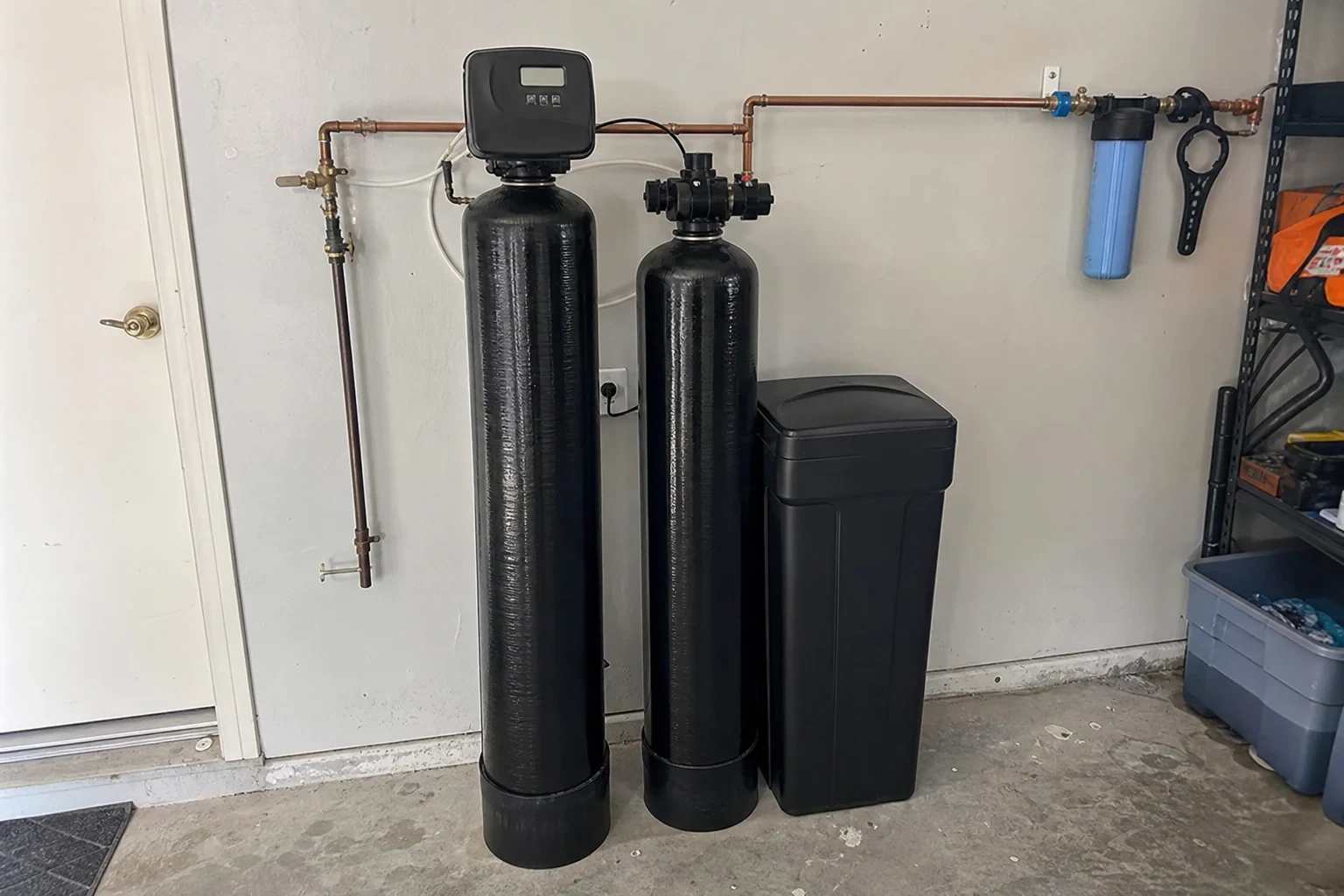
- An existing loop in the garage makes for an easier job than a home that needs new pipe run to the main line.
- The system your results call for
- Under-sink reverse osmosis, whole-home filtration and a softener are separate jobs with their own parts. A home may need one of them, or none.
Questions About Water Testing
Something not covered here? (480) 637-4902
Is the water test really free?
Yes. The test costs nothing, and you are under no obligation to buy a system. A good share of our visits close with the simple news that your water needs nothing added.
Do I need to be home for the test?
We ask that someone is there, because the most useful part is going over the results together. We also like to hear what you have noticed day to day, since that helps us read the numbers in context.
Will you recommend a softener no matter what the test shows?
No. We only suggest a softener when your hardness reading is high enough to show up as scale and spotting in your home. If a carbon filter or a drinking water system suits your results better, or nothing at all, we will say so plainly.
Can you test my existing softener or filter?
Yes. We can sample before and beyond your current equipment to see whether it is still working. Sometimes a settings change or a new cartridge is all it needs.
Should I test again later?
If you add a system, we retest after the install to confirm it is doing what it should, and we explain the upkeep that keeps it there. Without a system, testing again when you notice a change in taste, smell or buildup is a sensible habit.
Find Out What Your Water Actually Needs
A short visit, a clear set of readings and an honest answer about what to do next. If the answer is nothing, that is a good result too.