ServicesReverse Osmosis
Reverse Osmosis in Fountain Hills, Checked on After Install
We fit an under-sink reverse osmosis system with its own slim faucet, so every glass and pot you fill runs through a fine membrane first. It starts with a free water test. Once it is in, we check back on how it runs and show you how to care for the filters.
What reverse osmosis does at your kitchen sink
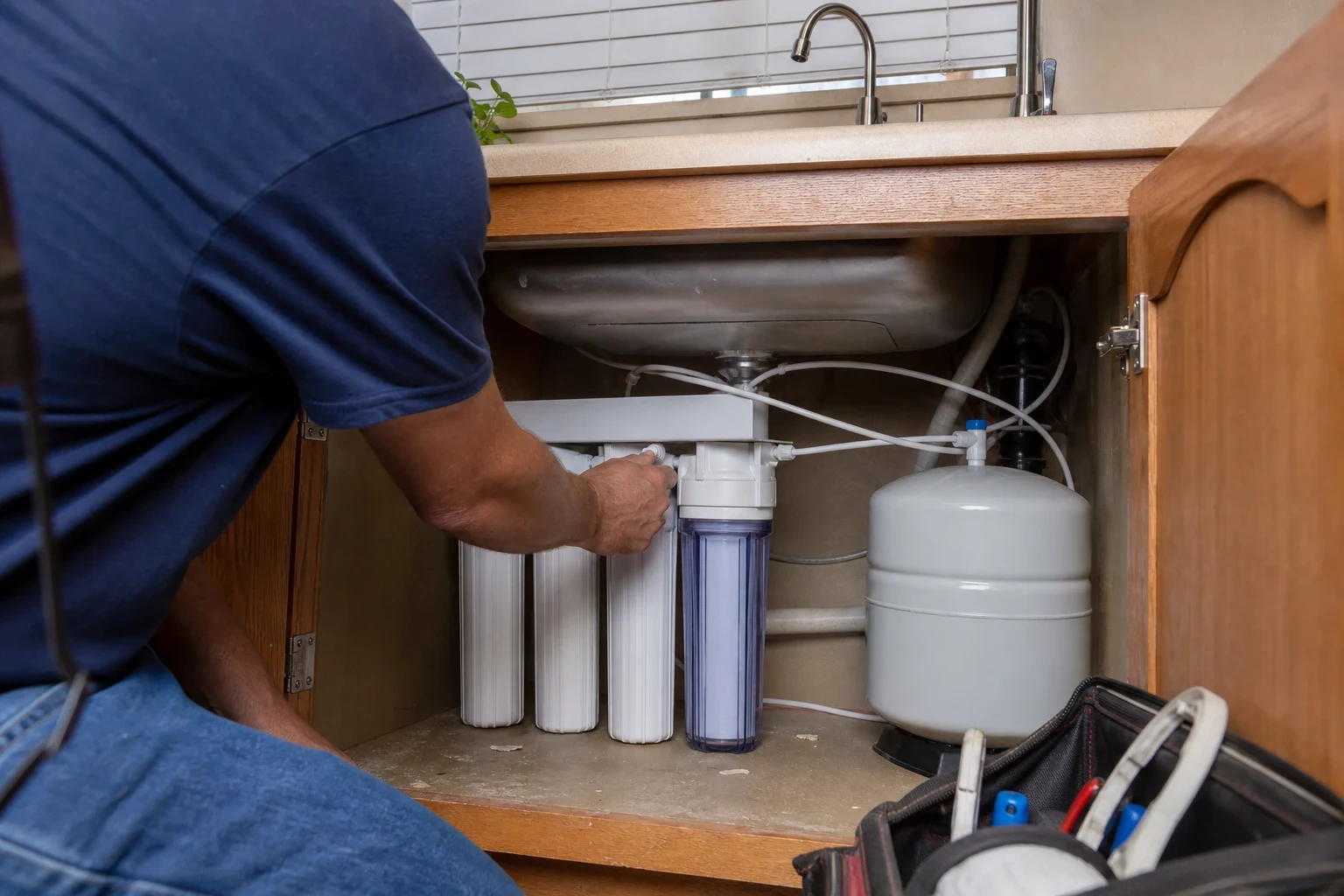
A reverse osmosis system pushes your water through a series of filters and a membrane fine enough to hold back dissolved minerals, salts and many trace contaminants. The cleaned water collects in a small storage tank under the sink and comes out of its own faucet beside your main one.
It makes sense when your main concern is what ends up in a pitcher, a pasta pot or the coffee maker. Water around Fountain Hills tends to carry a lot of dissolved minerals, which shows up as a chalky taste and white spots on glassware, and RO takes most of that out of what you drink. It is not meant to treat every tap in your home. Whole-home filtration or a water softener does that job, and we will tell you plainly if one of those suits you better.
What we care about most is the part after we leave. We check back once the system has settled in and make sure you know how to look after it.
What your reverse osmosis install includes
Pre-filters that protect the membrane
A sediment stage catches grit and a carbon stage removes chlorine before water reaches the membrane. Chlorine breaks down membrane material, so these stages decide how long the heart of the system lasts.
Membrane and storage tank
We mount the membrane housing and set the air charge in the pressurized tank before it fills, so the faucet gives a steady pour instead of a trickle.
A separate faucet at the sink
An unused opening left by a side sprayer or soap pump is the first place we look. When the counter needs a new hole, we drill granite, quartz or laminate with the proper bit and finish the edge cleanly. We also help you choose a finish that sits well beside your main fixture.
Drain connection with an air gap
The membrane sends a small stream of reject water to the drain. We fit a proper drain saddle so the line stays quiet and nothing can back up into the system.
A line to the refrigerator, on request
We can tee tubing off the RO tank and run it to the fridge dispenser and ice tray. Each fitting is checked for weeping before the refrigerator slides back against the wall.
Cleanup and labeled housings
We leave the cabinet dry and tidy, mark each filter housing with its install date and show you where the feed valve is.
Signs reverse osmosis may be right for you
- Bottled water is on every grocery list
- When the tap tastes off and plastic jugs crowd the pantry, an RO faucet lets you fill a pitcher at your own sink instead.
- Ice and coffee taste mineral-heavy
- Dissolved minerals and chlorine come through in ice cubes, tea and coffee. RO removes most of both.
- White film on glasses and the kettle
- Scale in the kettle and spots on drinking glasses point to high mineral content. RO handles the water you drink; a water softener handles the rest of the house.
- You have questions about older plumbing
- Older fixtures and fittings can add trace metals at the tap. A water test shows what is actually there, and an RO membrane is effective at reducing lead and similar metals in drinking water.
- Your current RO is slow or dripping
- A sputtering faucet, a tank that never seems full or a constant run to the drain usually means a worn membrane, a flat tank charge or overdue filters. We will tell you honestly whether it is worth bringing back or replacing.
How an install runs, from test to follow-up
- 1
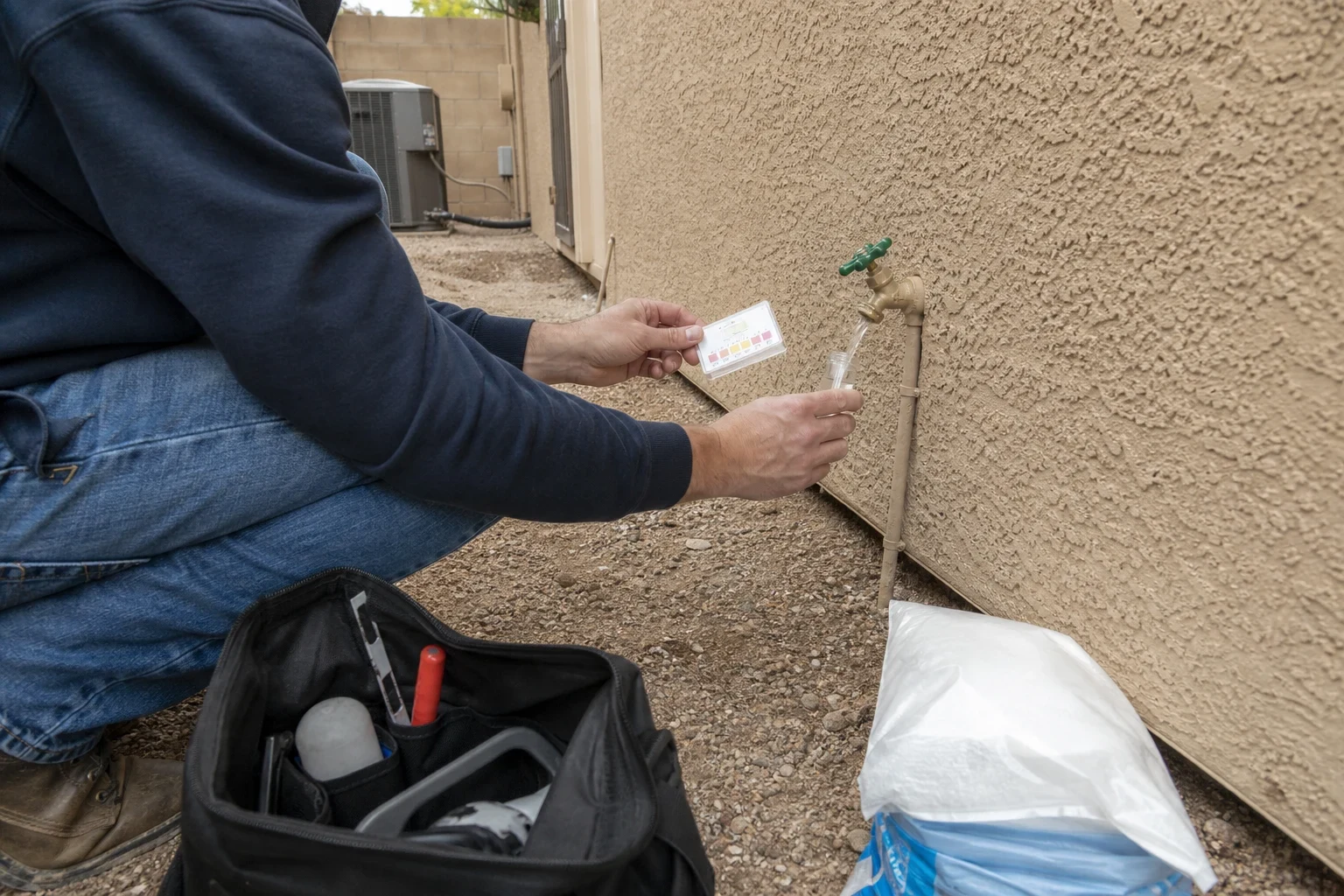
Free water test first
We test your water with zero obligation, explain the results and tell you whether RO is a good fit. You get installed system pricing before anything is scheduled.
- 2
Cabinet layout and protection
We clear and cover the cabinet floor, check the space around the disposal and plan where the tank and housings sit so you can still reach your bins and cleaning supplies.
- 3
Install, flush and leak check
We tap the cold line, mount the faucet, connect the drain and fill the system. The first tank is flushed to clear carbon fines, and we check every fitting with a dry paper towel before calling it done.
- 4
Care walkthrough
Before we leave, we show you how to close the feed valve, how each filter twists out and roughly how often each stage gets changed with your water.
- 5
We check back
A few weeks later we follow up to ask about flow and taste and answer anything that has come up. If something seems off, we arrange a visit to look at it.
What changes the cost of a reverse osmosis system
After your free water test, we go over installed system pricing by phone, listing equipment and labor separately. Water treatment systems include installation, so the figure covers the full job under your sink. Here is what raises or lowers it.
- How the system is built
- A tankless unit with a built-in pump costs more than a standard tank model. Adding a remineralization stage, which puts a bit of calcium and magnesium back for taste, means one more filter to buy and change.
- Your counter and faucet choice
- If the sink deck has an unused opening, the faucet goes in fast. Drilling a fresh hole in granite or quartz takes slower, more careful work, and choosing a faucet to match your other fixtures changes the parts needed.
- Incoming pressure and pretreatment
- Reverse osmosis depends on steady water pressure, and a weak supply may need a booster pump. Very hard water can wear out the membrane sooner unless a softener treats it first.
- Additional lines
- Running tubing to the fridge or a second sink means more parts and labor, more so when the cabinet run is long.
Reverse osmosis questions we hear
- How often do the filters need changing?
- Pre-filters are usually changed about once a year, sometimes sooner in mineral-heavy water. The membrane lasts longer, often a few years, depending on how much water you use and how well the pre-filters protect it. We label each housing and show you how to tell when one is due.
- Does reverse osmosis waste water?
- Some water goes to the drain to carry away what the membrane rejects. The amount depends on the system design and your water pressure. Newer units are more efficient, and we explain the ratio for the system we recommend before you decide.
- Is there room for it if my sink has a disposal?
- Usually there is. The tank and filter housings can tuck to one side or against the back wall of the cabinet. We sketch out the layout during the water test so the disposal and any pull-out bins stay clear.
- Does RO water taste flat?
- Removing minerals gives water a very clean, neutral taste. Some people prefer a little mineral back, which is what a remineralization stage adds. We can set you up either way.
- Do I still need a water softener?
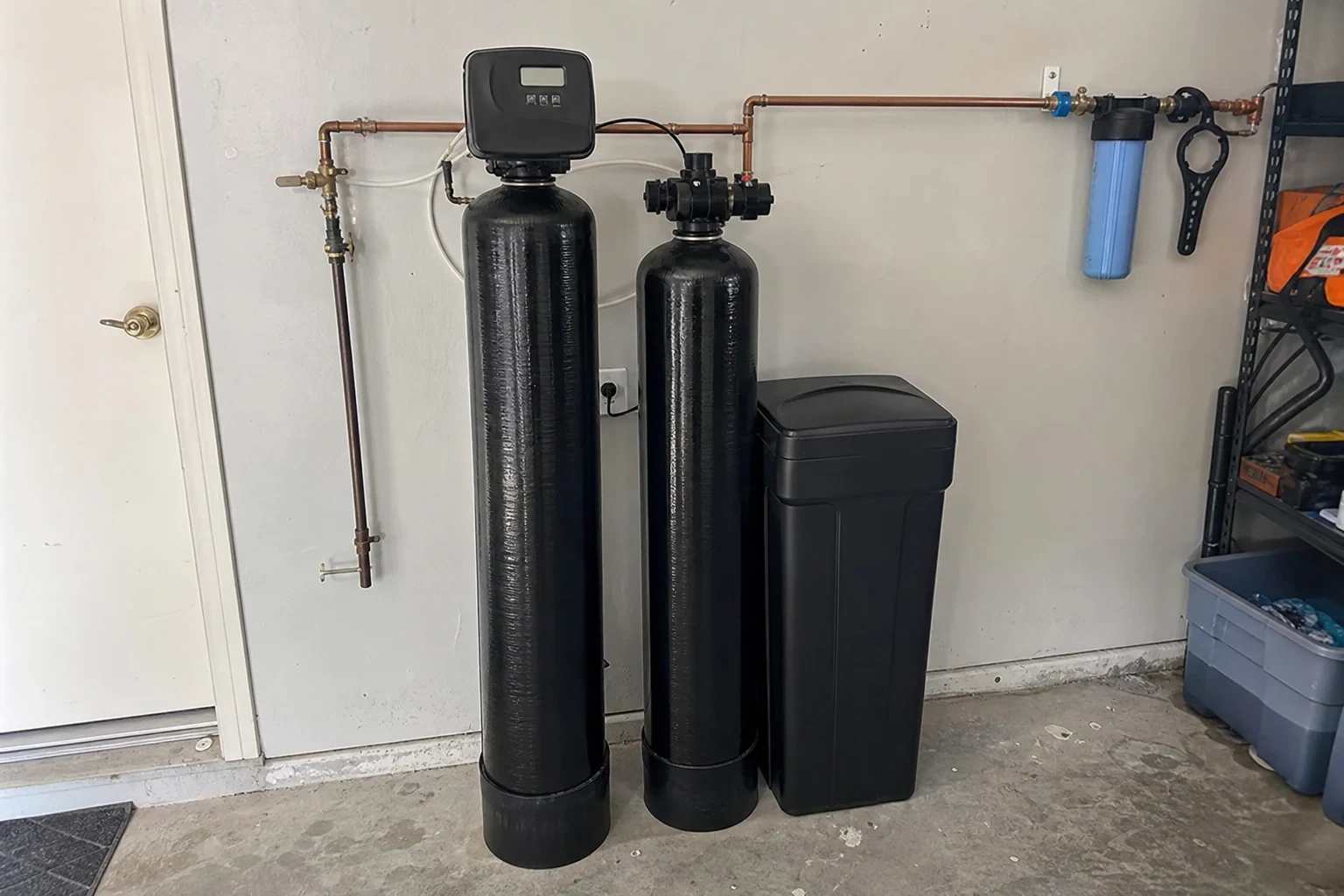
- RO treats one faucet. Scale on showerheads, the water heater and the dishwasher comes from the water reaching every other fixture in your home, and that is what a water softener handles. Your water test tells us whether you need both or just one.
- What happens after you install it?
- We follow up a few weeks later to ask how it is running, confirm the flow and taste are where they should be and answer questions about care. By then you will know which filter goes where and how to shut the system off if you ever need to.
Start with a free water test
We test your water, tell you honestly whether reverse osmosis is worth it and give you installed pricing on the phone. Once it is in, we check back.